Bridging the Gap Between Digital Precision and Physical Expression: The Role of 3D Printing Pens in Modern Creative Workflows
In the rapidly evolving landscape of digital fabrication, the boundary between screen-based design and physical reality has never been more porous. While industrial-grade 3D printers have long dominated the conversation around additive manufacturing, a smaller, more agile tool is quietly reshaping how creators, entrepreneurs, and hobbyists approach prototyping and artistic expression: the 3d Printing Pen. This device represents a fundamental shift in accessibility, allowing users to extrude heated plastic filament directly from their hand, effectively turning air into solid form. As we move further into an era where customization and personalization are paramount, understanding the utility of this technology requires looking beyond its novelty factor and examining its integration into broader creative and business ecosystems.
The Evolution of Accessible Fabrication
To understand the significance of the 3d Printing Pen, one must first appreciate the democratization of design tools over the last decade. For years, high-fidelity physical modeling was the exclusive domain of those with access to expensive machinery or specialized technical skills. The introduction of desktop 3D printing began to break down these barriers, but it still required a degree of patience and spatial awareness that many casual creators found daunting. The 3D pen emerged as the logical next step in this progression—a handheld extension of the designer’s intent.
This device operates on principles similar to traditional soldering irons or hot glue guns but utilizes thermoplastic filaments such as PLA (Polylactic Acid) or ABS (Acrylonitrile Butadiene Styrene). By heating the material to a malleable state and depositing it layer by layer or line by line, users can create three-dimensional structures without the need for complex slicing software or automated build plates. This immediacy is crucial for rapid ideation. When a designer sketches a concept on paper, the transition from two-dimensional drawing to three-dimensional object is often fraught with interpretation errors. A 3D pen allows for real-time correction and tactile feedback, bridging the cognitive gap between visualization and creation.
Synergy with Vector Design Ecosystems
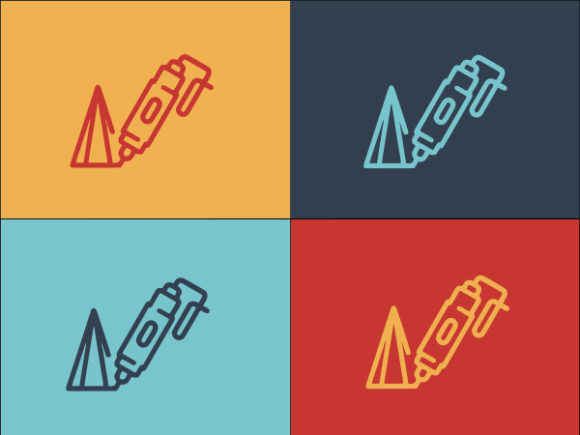
The true power of the 3D pen is unlocked when it is paired with robust digital design workflows. Many modern creators rely on vector-based assets to ensure scalability and precision. Consider the versatility of a logo template that is described as elegant, modern, versatile, and stylish. Such a template is not merely a static image; it is a blueprint for brand identity across multiple mediums. When this digital asset is prepared for physical manifestation via a 3D pen, the quality of the source file becomes critical.
High-quality design files are typically provided in formats like SVG (Scalable Vector Graphics), which are compatible with industry-standard software including Inkscape, Gravit Designer, Adobe Photoshop, Adobe Illustrator, Sketch, Vectr, Inkpad, and iDesign. These 100 Scalable Vector Files offer several distinct advantages for the user employing a 3D printing pen:
- Precision in Extrusion: Vector paths provide clean, mathematical curves that translate smoothly into plastic lines, reducing jagged edges and ensuring a professional finish.
- Color Customization: Because these templates are easy to edit colors, designers can match the filament hue precisely to their brand palette before even starting the physical build.
- Adaptability: Whether the final goal is a small desk ornament or a large architectural model, the scalable nature of the vector ensures that proportions remain intact regardless of size adjustments.
This interoperability between digital vector environments and analog extrusion tools highlights a key trend in modern design: fluidity. Professionals no longer view digital and physical design as separate silos. Instead, they exist on a continuum where a logo designed in Adobe Illustrator can be traced, expanded, and printed using a 3D pen within minutes.
Applications Across Industries and Use Cases
The relevance of the 3D pen extends far beyond simple crafts. Its application spans a wide array of professional sectors, driven by the growing demand for bespoke solutions and tangible marketing materials. Let us explore how this technology intersects with specific design domains.
Brand Identity and Stationery
In the realm of Wedding Stationery and corporate branding, the desire for uniqueness is driving consumers away from mass-produced goods. A logo rendered in 3D plastic offers a tactile element that flat print cannot replicate. Imagine a wedding invitation suite featuring embossed, raised lettering created with a 3D pen, or a corporate gift box adorned with a custom, textured logo. These elements add perceived value and emotional resonance to everyday items. The "ready to use print" nature of modern templates means that professionals can quickly prototype these ideas, test them physically, and then refine the design digitally before committing to final production runs.
Packaging and Product Design
For Entrepreneurs and startups, packaging is often the first point of contact with a consumer. Traditional prototyping methods can be time-consuming and costly. The 3D pen allows for rapid iteration of packaging concepts. Designers can sketch out structural ideas, test fit components, and create custom inserts or closures on the fly. Furthermore, in Product Design, the ability to quickly hold a virtual concept in one’s hands accelerates the feedback loop. It transforms abstract shapes into concrete objects, facilitating better communication among team members and stakeholders.
Apparel and Merchandising
The fashion and merchandise industries are also embracing additive techniques. In T-Shirt Design and Apparel Design, 3D pens are used to create unique embellishments, buttons, zippers, or decorative patches. Unlike screen printing, which requires setup fees and minimum order quantities, 3D printing allows for one-off customization. A freelancer designing a limited-edition run of branded hoodies can use a 3D pen to create custom logos or patterns that stand out visually and texturally. Similarly, in Sticker Design and Label Design, the pen enables the creation of layered, dimensional stickers that catch the light and draw the eye, offering a premium feel to product labeling.
Typography and Artistic Expression
Typographic Design benefits significantly from the three-dimensional aspect of 3D printing. Letters are no longer confined to a plane; they become sculptural forms. Artists and typographers use the pen to explore depth, shadow, and perspective in ways that traditional typography cannot achieve. This aligns with the broader cultural shift towards experiential design, where engagement is multisensory. A stylish, modern logo rendered in thick, bold plastic lines conveys strength and permanence, qualities that are highly valued in contemporary branding.
Changing Consumer Expectations and Workflow Efficiency
Why are people paying attention to this technology now? The answer lies in changing consumer expectations regarding speed, personalization, and sustainability. Consumers today expect brands to speak to them individually. They crave products that feel handmade, even if they are produced at scale. The 3D pen supports this demand by enabling a "handmade aesthetic" with the precision of digital tools.
From a workflow perspective, the ease of customization is a major driver. Templates that are "easy to customize" reduce the barrier to entry for non-expert users. A marketer who may not be proficient in complex CAD software can still produce high-quality physical assets by modifying a pre-made SVG template. This efficiency allows businesses to respond faster to market trends. If a new color scheme is trending, or if a competitor launches a similar product, a company can quickly adapt its physical branding materials using readily available design resources.
Moreover, the environmental aspect cannot be ignored. Many 3D pens utilize PLA, a biodegradable thermoplastic derived from renewable resources like corn starch or sugarcane. While the environmental impact of plastic consumption is a serious concern, the ability to repair, modify, and upcycle existing objects using a 3D pen promotes a circular economy. Instead of discarding a broken component, a user can trace the missing piece and print a replacement. This mindset of repair and reuse resonates with increasingly eco-conscious consumers.
Conclusion: The Future of Hands-On Creation
The 3D printing pen is more than just a gadget; it is a symbol of the convergence between digital intelligence and human craftsmanship. It empowers professionals, creators, and enthusiasts to take control of their physical environment, transforming abstract ideas into tangible realities with unprecedented ease. As design templates become more sophisticated—offering elegant, modern, and versatile options compatible with leading design software—the potential applications expand exponentially.
Whether you are a graphic designer exploring new dimensions for your portfolio, a small business owner seeking unique packaging solutions, or an artist experimenting with typographic sculpture, the 3D pen offers a powerful toolkit. It fits seamlessly into modern workflows, enhancing creativity rather than hindering it. By leveraging scalable vector files and intuitive hardware, users can navigate the complexities of physical design with confidence. As we look to the future, the distinction between digital and physical creation will continue to blur, and tools like the 3D pen will play a pivotal role in shaping how we interact with the world around us. Embracing this technology is not just about keeping up with trends; it is about unlocking a new language of expression that is both practical and profoundly inspiring.